Kinesiology tape is a stretchy, therapeutic tape designed to support muscles, reduce pain, and improve movement without restricting motion. Originally developed for athletes, it’s now widely used for injury recovery, posture correction, and daily physical support.
Made from breathable, elastic cotton with a medical-grade adhesive, kinesiology tape mimics the skin’s flexibility — allowing for full range of motion. Whether you’re dealing with back pain, swollen joints, or poor posture, this tape can provide lightweight, lasting support.
In this guide, we’ll explain what kinesiology tape is, how it works, and how to apply it safely. If you’ve ever wondered about kinesiology tape, you’re in the right place.
What does kinesiology tape do?
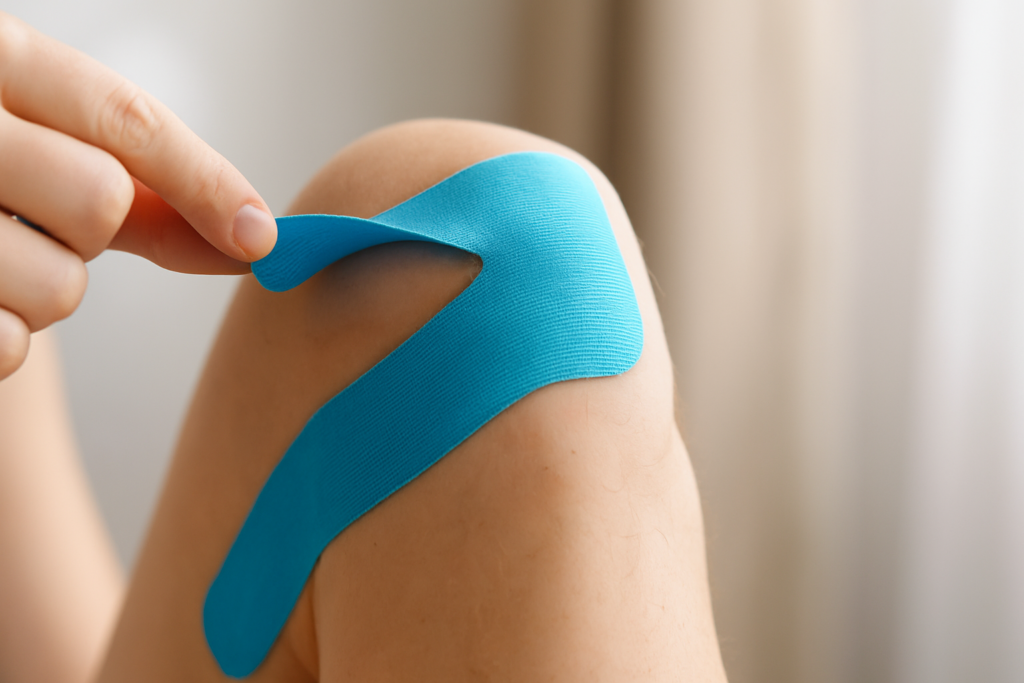
Kinesiology tape does more than just stick to your skin — it interacts with your body to support function and healing. When applied properly, the tape helps reduce pressure on inflamed or overused tissues, eases pain, and cues better posture or muscle activation. It’s often used during recovery from injury or to enhance performance during training.
The tape lifts the skin microscopically, creating space for better blood and lymph flow. This helps reduce swelling and promotes circulation. It can also improve body awareness — helping you feel the right muscles and avoid faulty movement patterns.
Whether you’re recovering from a sprain, managing chronic pain, or just need postural support, kinesiology tape gives light, flexible reinforcement without limiting mobility.
How does kinesiology tape work?
Kinesiology tape works by gently lifting the skin away from the tissues beneath. This “lift” reduces pressure, allowing blood and lymph to flow more freely. Improved circulation helps flush waste, reduce swelling, and relieve discomfort.
It also provides neuro-sensory feedback — telling your brain where your body is in space. This subtle input helps correct posture and guide movement. In simple terms, it’s tape that works with your body, not against it.
Does kinesiology tape really work?
So, does kinesiology tape really work? Research shows mixed results — but many users report real benefits. It’s most effective when applied correctly for the right condition.
While it’s not a cure-all, tape can offer short-term relief, better posture, and muscle support. Professional athletes, physical therapists, and rehab patients all use it. When paired with proper movement or therapy, kinesiology taping can make a noticeable difference.
What is kinesiology tape used for?
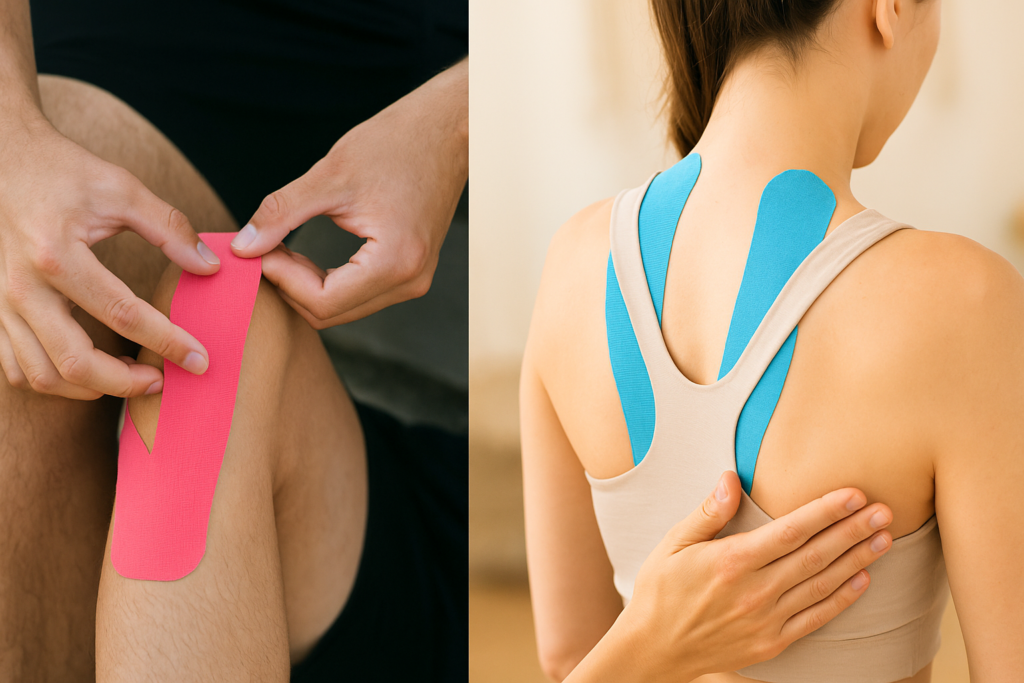
Kinesiology tape is used for a wide range of issues — from injury recovery to posture correction and athletic performance. Its main functions are to support joints, reduce swelling, relieve pain, and cue proper movement. Unlike rigid athletic tape, it’s flexible and moves with your body, making it ideal for both active recovery and daily support.
People commonly use kinesiology tape for conditions like tendinitis, muscle strain, and joint instability. It can be applied to the knees, back, shoulders, and more. In rehab settings, it helps maintain alignment while the body heals. For posture, it acts like a physical reminder to stay upright.
Whether you’re an athlete or desk worker, knowing what kinesiology tape is used for helps you apply it with a purpose — not just for decoration.
Kinesiology tape for knee pain
Kinesiology tape for knee pain offers support without limiting movement. It’s especially useful for runners, jumpers, or those with arthritis. Taping around the kneecap can help guide patella tracking and reduce strain on surrounding tissue.
The goal is to stabilize the joint and reduce pressure during motion. This type of knee taping can ease discomfort when walking, squatting, or climbing stairs — making daily movement more manageable.
Kinesiology tape for posture correction
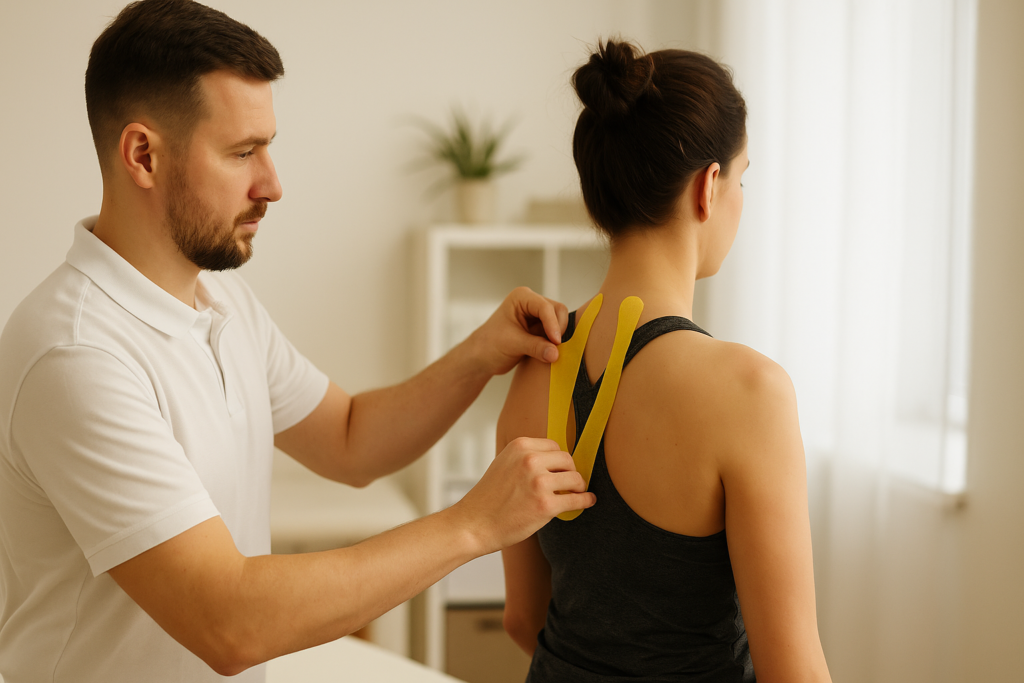
Using kinesiology tape for posture correction is common among people who sit for long hours or deal with rounded shoulders. The tape gently pulls your shoulders back, reminding your body to stay aligned.
It doesn’t force you into position — instead, it cues awareness and supports natural posture. This makes it ideal for office workers, students, or anyone needing back alignment support during the day.
How to apply kinesiology tape for back pain
To apply kinesiology tape for back pain, position the body in a slight forward bend to stretch the area. Use two vertical strips along the spine and a horizontal one across the lower back.
Apply 0–25% stretch in the center section only — never at the ends. This method helps unload pressure, ease tight muscles, and restore mobility. Whether it’s lower back strain or posture fatigue, taping the lower back offers targeted relief.
How long can you wear kinesiology tape?
Most people can wear kinesiology tape for 3 to 5 days without irritation. It’s designed to stay on through showers, workouts, and sleep.
To maximize wear time, avoid applying over oily or sweaty skin. If it starts peeling at the edges, trim them — don’t rip it off. Remove the tape if you feel itching, burning, or discomfort. Otherwise, it’s safe to wear until it naturally begins to lift.
What are the benefits of kinesiology tape?
The benefits of kinesiology tape go beyond just support. It’s a lightweight, flexible tool that helps reduce pain, improve movement, and speed up recovery — all without limiting your range of motion.
One of the main advantages is pain relief. By lifting the skin, the tape reduces pressure on sensitive tissues and alters how pain signals are sent to the brain. It also improves blood and lymphatic flow, helping reduce swelling and stiffness after injury or overuse.
Kinesiology tape also enhances body awareness — it gives subtle feedback that reminds you to maintain better posture or avoid overloading certain muscles. Whether you’re dealing with a sprain, tendonitis, or fatigue from poor posture, taping can make movement feel more supported and less painful.
Plus, it’s safe to use alongside exercise, physical therapy, or rest. From pro athletes to everyday desk workers, many find taping to be an easy, low-risk way to improve daily comfort and function.
Does kinesiology tape reduce pain?
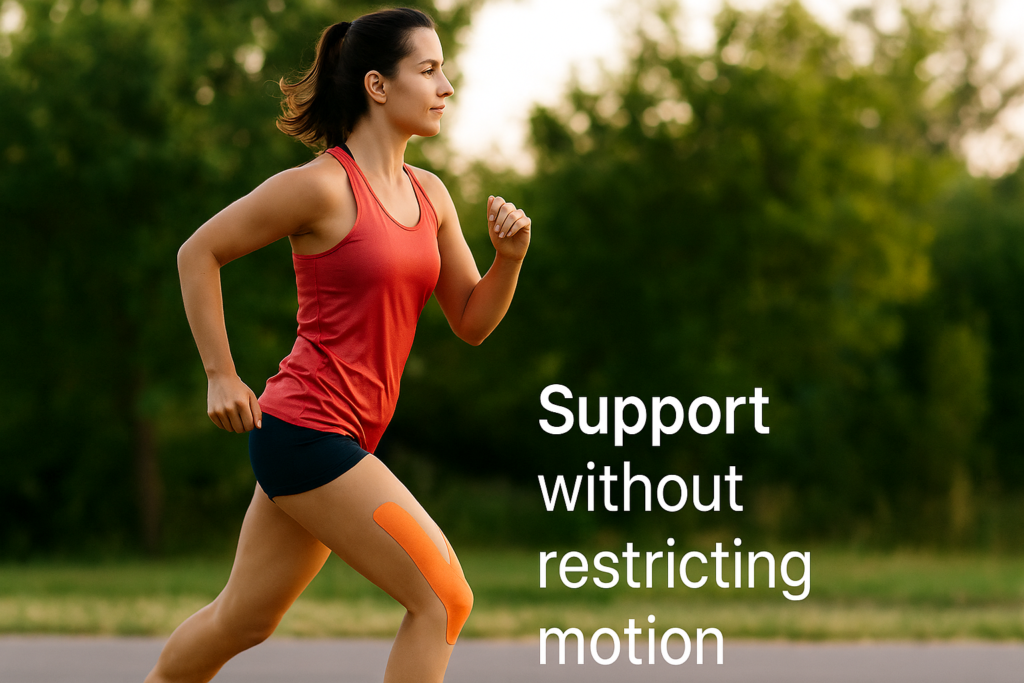
Yes — kinesiology tape can reduce pain by changing how your body senses pressure and tension. It slightly lifts the skin, decreasing contact on pain receptors underneath. This reduces irritation, improves mobility, and makes movement feel easier.
By improving circulation and reducing swelling, the tape helps relieve tight, sore areas. It doesn’t block pain like medication — instead, it works with your body’s natural systems to lower discomfort while staying active.
Can kinesiology tape speed up recovery?
Kinesiology tape may help speed up recovery by improving fluid movement through the area. Better blood and lymph flow brings nutrients in and flushes waste out, which supports healing.
It also minimizes strain on injured tissue while still allowing gentle movement — which is key for recovery. While it’s not a substitute for rehab, taping can keep you moving comfortably, reduce downtime, and help you return to activity faster.
Conclusion
Kinesiology tape is more than just colorful strips — it’s a functional tool that supports your body without restricting movement. It helps relieve pain, improve posture, reduce swelling, and speed up recovery when applied correctly. From athletic performance to daily posture correction, this tape adapts to a wide range of needs.
If you’re still unsure about kinesiology tape or how to use it for your specific condition, consult a physiotherapist or trained taping professional. They can guide you on the right application and ensure safe, effective results.
With the right technique and purpose, kinesiology taping can be a simple but powerful way to move better, feel better, and stay active.